If you’re seriously considering installing solar PV for your home, you’ve probably already contacted at least one, preferably three, MCS installers for a quote! Once you’ve got your quotes, what do you need to look out for and how do you decide which to choose? Is going for the cheapest a good idea, or would one of the more expensive quotes prove to be a better buy in the long term?
The first thing to do is to read it through thoroughly and check it for accuracy. For example, is the information about your property and your current energy consumption, correct? One quote we looked at recently stated that the property wasn’t in a Conservation Area when, in fact, it was! Importantly, being in a Conservation Area means it’s likely you’ll need Planning Permission to install solar PV. Installing without Planning Permission can be costly, with the potential of being forced to have the panels removed/reduced in number/configured differently etc. to reduce the visual impact. If you’re not sure if your property is in a Conservation Area or not, you can check with your local council.
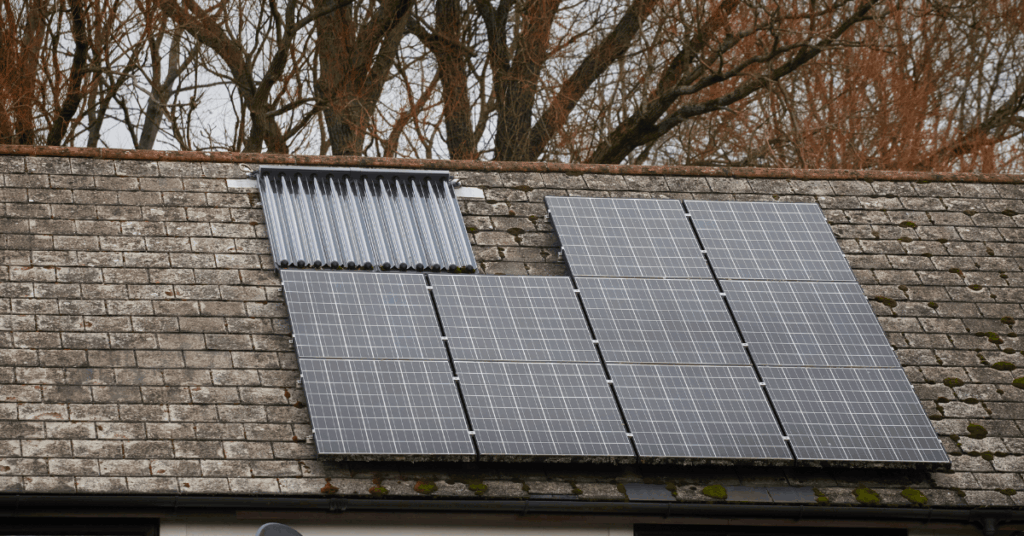
Another thing to check is the positioning of the panels – are they where you were expecting (remembering that each panel is approximately 1m x 2m in size)? Are they all on your roof? Interestingly, one quote we looked at recently had half the panels on the neighbour’s roof! Do you agree with what is says on the quote about shading? Or is there a chimney or other obstruction that will cast shade on one or more panels for much of the day? As you’re probably aware, shading is likely to have a severe impact on the output of your solar panels and needs to be avoided if possible.
Now might also be the time to review your thinking on battery storage. If you asked the installer to quote for battery storage, it is worth requesting a breakdown of the quote to see how much extra this will cost. A battery can add an additional 30-50% to the overall cost, so now is the time to carefully consider the potential savings from having one installed. If you’re at home during daylight and are using things that require electricity (dishwasher, car charging, etc), having a solar battery may not be as beneficial as first imagined as their will be less surplus electricity to be stored). There are also alternative ways to gain benefit from any surplus electricity generated, including a hot water controller (if you have a hot water cylinder) and claiming the Smart Export Guarantee from an energy supplier. Further information on the economics of solar PV can be found in this recent blog.
It’s also worth looking at the Product Datasheets for the solar PV panels and inverter proposed by the installer. If the installer hasn’t provided you with a copy, you can request one, or do a search of the web. Page one of a standard datasheet includes information on the output in Watts measured at standard test conditions and the module efficiency and page two details the panel’s dimensions, weight, certifications (make sure that you see the MCS one there – this scheme certifies products as well as installers) and the length of the warranty for workmanship and performance.
As almost all solar panels will have a warranty for workmanship of 10 years and performance for 25 years (although some companies are now offering 30 years), this isn’t the best way to distinguish between them. It is better to spend some time looking at the detail, in particular the amount of degradation in performance over the panel’s lifetime. What you are looking for are panels that suffer no more than a 2% to 3% degradation in the first year and no more than 0.50% in the following years (meaning that the panel can generate at least 85% of their initial output after a 25- year period).
Warranties on inverters are generally much shorter. Ten years is the norm, although twelve to fifteen years or even longer is also possible, sometimes at an additional cost. Having an inverter with a long product and workmanship warranty obviously has its benefits, but any additional cost for an inverter with a longer warranty needs to be weighed up against the likelihood that the inverter will need to be replaced during the lifespan of the panels. Even an inverter with a long warranty is not likely to last as long as the solar panels.
A final point to consider are the aesthetics of your new solar PV system. Most solar PV panels on the market now are black, but dark blue ones are still available. Some panels are all black, but others have visible spacing between the cells that make up the panel. The frame around the panel, the mounting frame and brackets can be black, white, or aluminium. As these are things that you will be able to see from the ground, it does pay to check that you are happy with what has been included in the quote. Also, always check that what gets delivered for install matches what was included in the quote.
The aim of this blog has been to assist you with what to check for on your quote for solar PV and help you to decide which quote to accept. If anything isn’t clear to you about the quote you have received, your first port of call should be the installer who sent you the quote. A good installer will take the time to answer you questions and adjust the quote as necessary. It is, after all, in everyone’s interests to ensure that the job gets done right first time.