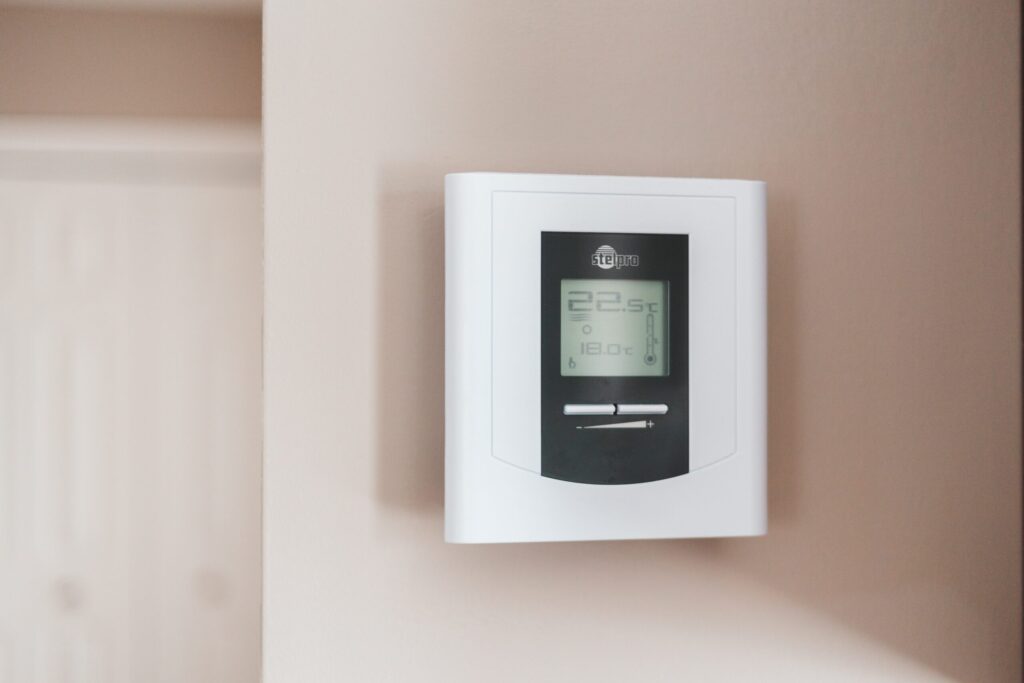
“David Cowdrey, Directory of External Affairs at MCS Charitable Foundation continues exploring how the UK homes should be heated in this blog.”
When it comes to our homes, we have to look at other forms of heating options, and what is available off the shelf now that can reduce CO2 emissions. The simple answer for heating our homes has to be heat pumps. The government has already set a target to install 600,000 heat pumps annually4 by 2028, that’s 300,000 installed into new homes and at least 300,000 retrofitted every year. The advantage of heat pumps is that for every unit of electricity put in, a heat pump can give three or four units of heat out the other side. Furthermore, electricity prices are falling and taxes are being moved over to more carbon intensive fuels5, making this a sensible way to go and means the long-term running costs make this the economical option for most homes. Another benefit is a heat pump’s ability to cool as well as heat, so as we face the uncertainty of climate change and hotter summers, heat pumps can also cool a home as well as heat it. However, initially the cost of an air source heat pump could be nearly double or for some larger homes treble the cost of a current gas boiler, depending on the size of pump required, and ground source heat pumps are more expensive still. Furthermore, the associated energy efficiency measures must first be installed before a heat pump and in some cases new heat emitters like radiators.
The government needs to do more to reduce the costs of heat pumps if they want to hit their 600,000 heat pumps a year target. They need to consider removing VAT on all domestic renewables, as well as removing VAT on retrofitting and energy efficiency measures.
Additionally, we have seen the Green Homes Grant finish suddenly, which was a good short term grant scheme, but was badly administered and should have been run for many years. The government urgently needs to replace this scheme with a stable, long-term grant that reduces costs, in conjunction with a series of positive tax incentives and rebates. In Italy, the government give a 65% tax rebate6 on heat pumps, which might explain why other countries are doing so well in adopting zero carbon heating options and should encourage the UK government to look at a similar approach.
A new grant scheme should be simple and easy to use for consumers and give a lump sum discount proportionate to the technology being installed (possibly a percentage up to a max limit). Any grant needs to be significant in reducing the capital cost and run for a period of 10 years, to provide a stable environment to help the renewables sector grow, which in turn will create green jobs and most importantly for consumers reduce the cost of heat pumps. When they do this there will be a massive shift in the market to adopt this clean, cheaper to run technology.
So, pros and cons on all sides and coming from the renewables sector I have looked at the evidence from all technologies and CO2 footprints, and engaged in the debates politically.
The other problem we face as consumers is that we are not aware of the different heating options which are available and are used to the heating systems we have in our homes. We all look to our trusted boiler/gas/heating engineer and are normally faced with a distress purchase when the boiler breaks suddenly, and normal happens in the depth of winter on the coldest day and when funds are short. When faced with such emergencies we as consumers have no time to research the issue and source alternative heating, so the default fall back is to speak to a gas/heating engineer so you may be limited in the choices they can fit and install. As consumers it is worth looking in advance of boiler failure to decide what are best zero carbon heating options for your home, so it becomes a planned replacement and known cost.
If you want to future proof your home then look around and consider a zero-carbon heating option like heat pumps and other domestic renewables like solar thermal and solar PV to create a smart home that reduces bills even further, though this does require significant investment. I also hope the government will start an awareness campaign of zero carbon heating options to promote the benefits of alternatives to gas boilers, so technologies like heat pumps and solar thermal become the norm and become more familiar to consumers, to help us move away from fossil fuels and take the positive steps to reduce costs to make going green the simple and easy option.
The government needs to remember that as consumers we don’t have deep pockets and those who are in fuel poverty need low-cost energy and heating that won’t cost the earth. To decarbonise our homes needs significant investment and now is the time to budget for a net zero future and provide funds for local authorities so those people in fuel poverty get cheaper, or even free, heat pumps.
The first half of David’s blog can be found here, and talks about how hydrogen has a place on the journey to net zero.