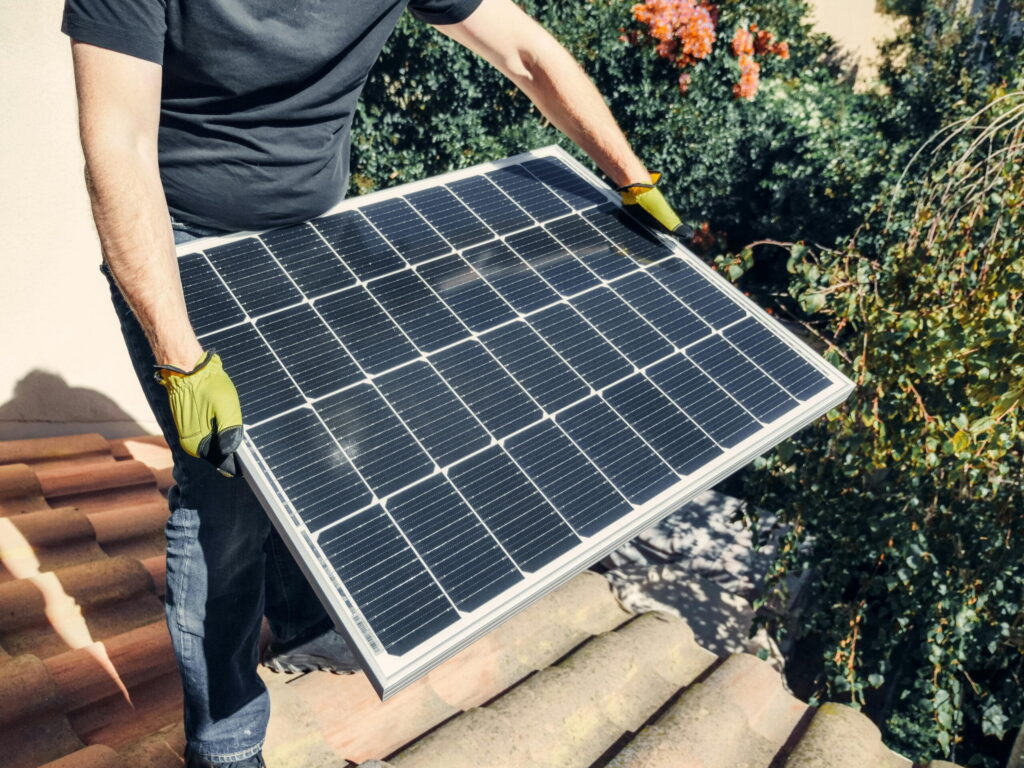
When I first started working in the renewable energy sector (over twenty years ago now!) we spoke as much about solar water heating (SWH) as we did about solar electric (photovoltaic or PV). Solar PV was relatively new to the domestic market and few householders could afford the cost, which we often quoted at between £4k and £5k per kilowatt peak (at least double the cost it is today).
Few people had any experience of solar PV or SWH. Fast forward to today and solar PV has become common place, visible in fields, on roof tops and an ever-growing array of solar electric powered devices. SWH on the other hand is still rarely seen. Most people today who have firsthand experience of SWH have bought or rented a new property with SWH already installed.
What does SWH offer?
SWH is a technology that can contribute provide 50-70% of your hot water needs over a year, with seasonal variations, so a back up system for heating your hot water is required outside of the summer months. A SWH requires a solar collector, usually placed on the roof of a property, made up of panels or tubes which is linked to a twin coiled cylinder.
The Energy Saving Trust say that the typical cost of a SWH system is £6000 and that the typical gas saving for a 4m2 system is £105 a year (and £145 for oil) based on April 2024 prices.
More information on the requirements for SWH and how to get the most out of your system can be found on our SuperHomes website and on the Which? website.
The MCS database
The Microgeneration Certification Scheme (MCS) has maintained a Data Dashboard of small scale installs of renewable energy systems, including solar PV and SWH, since 2010. In addition to the number of installs by month, the Dashboard provides information on the counties with the highest number of installs and the average price of each system by month, based on the information provided to them by installers.
The Dashboard shows that the total number of installs of solar PV from 2010 to June 2024 was just over 1.5m compared to just under 44,000 for SWH. That is thirty-four installs of solar PV to every one SWH system. Curious, I decided to investigate further.
The impact of Government Incentives
It is clear from looking at the statistics that there have been significant fluctuations in the number of installs of both technologies since 2010. The main reason behind this are government incentives, specifically the Feed in Tariff (FiT) for solar PV and the Domestic Renewable Heat Incentive (DRHI) for SWH.
The DRHI opened in April 2014 and closed to new applicants on 31st March 2022. Anyone in receipt of the DHRI receives quarterly payments for seven years. the amount of the payment depends on the type of renewable heat technology used, the size of the property and the amount of heat used. The installation of SWH peaked in July 2021 with 1064 installs in that month alone. In May 2024 there were just sixteen installs.
The FiT was started earlier- on 1st April 2010, but also closed earlier on 1st April 2019, but unlike SHW installs are now at similar levels (at around 15,000 a month) to what they were just before the FiT ended. One of the main drivers behind this has been the hike in energy prices, which started in the summer of 2021. Increasing electricity prices, the availability of battery storage and the increase in electric car ownership has made solar PV a cost-effective option (with a payback well within the lifespan the solar panels) or those that can afford the initial outlay, without the need for government incentives.
Competing for roof space
To work well a SWH system requires the same orientation, pitch, and the absence of shading as solar PV. However, the amount of roof space required is less than solar PV, as it needs to be sized to match the number of occupants, at approximately one meter square per person.
The size of a solar PV system is not limited in the same way. The usual maxim is the bigger the better, particularly if the occupant is planning to have a battery installed to store surplus electricity. Space on roofs with the appropriate orientation is often limited, especially when chimney, skylights, dormer windows and roof extensions are present.
If space is limited, the simple conclusion is likely to be to go with one solar technology only – solar PV to reduce costs and maximise the potential returns on the investment made.
The demand for hot water
SWH only really comes into its own in households that have a high demand for hot water in the evening. The type of household that comes to mind is one with young children, all of whom need a bath before bed. With most washing machines and dishwasher sold in the UK being cold fill, a SWH does not make much sense for single person households and those where everyone takes a quick shower rather than takes a bath (particularly if the shower is electric!).
In addition to this it is possible to get what is known as a solar diverter if you still have a hot water cylinder and solar PV. This is a device that switches electricity being generated by the solar PV system to heating hot water using an immersion heater. This is inexpensive if this is fitted at the same time as the rest of the solar PV system and particularly beneficial for households that do not have battery storage. I have one in my home, and it enables me to switch off my gas boiler from May through to August or September.
More information on solar diverters can be found in this article from the Eco Experts.
Conclusion
SWH has not taken off like solar PV. The increase in energy prices has made solar PV an attractive long-term investment, without a government incentive even for those less interested in the environmental benefits. Plus, not every household has sufficient demand for hot water to make SWH a viable option, particularly when you consider the alternative option of a solar PV system with a diverter.
With no government incentives, limited roof space, tight budgets, and a competing technology with a reasonable payback, it does not surprise me that there are few SWH installs happening in the UK just now. What I would like to see is every new home being fitted with both SWH and solar PV, but this seems to be a very long way off yet.