


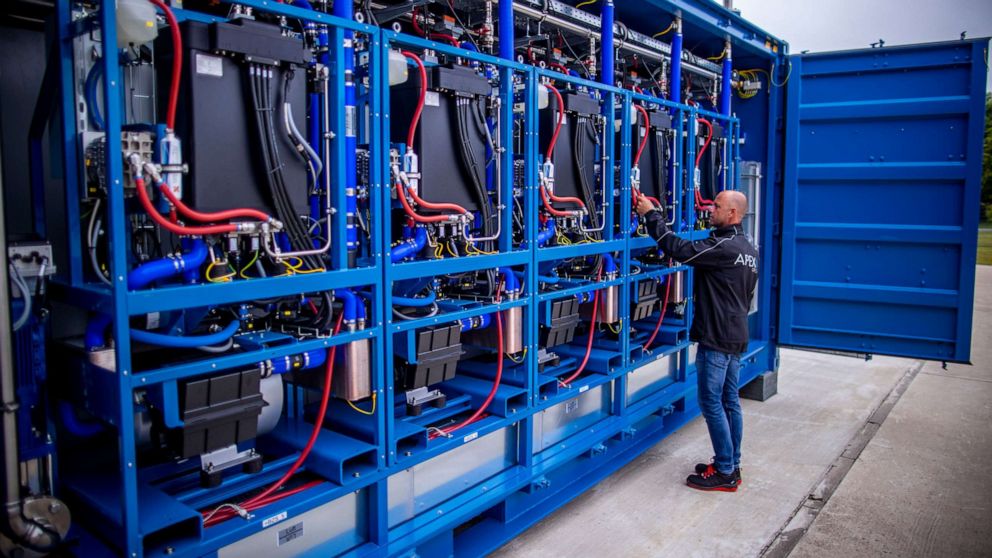
Hydrogen has gained a lot of attention in recent years as a potential zero carbon fuel. It reacts with oxygen, releasing energy and produces water as its only product. Hydrogen gas doesn’t occur naturally in our atmosphere and needs to be produced before it can be used; because of this hydrogen isn’t considered an energy source but rather an energy carrier. Hydrogen can be produced in several ways which is why you may have heard of the terms “blue, green, pink or grey” hydrogen, as these colours are used by some to differentiate the energy source for the production of hydrogen. No matter which source, all hydrogen can be used to store energy and as zero carbon emission fuel.
| Blue | Green | Pink | Grey |
| Methane reformation with carbon capture | Electrolysis using electricity from renewables | Electrolysis from nuclear power | Methane reformation without carbon capture |
https://www.nationalgrid.com/stories/energy-explained/hydrogen-colour-spectrum
The current UK government released a Hydrogen strategy document that in classic Boris Johnson style outlines a pathway to the UK becoming a “global leader” in the manufacture and utilisation of hydrogen. Initially with an “ambition” of 5GW production capacity for 2030 with at least half coming from electrolysis, this has since been doubled to 10GW with the British Energy Security Strategy press release. Though still using the term “ambition” with the caveat being that this goal is dependent on successful cost reduction. The other half of this hydrogen will be primarily coming from Steam Methane Reformation (SMR) with carbon capture AKA blue hydrogen.
Scaling up of the hydrogen economy has so far met with a “chicken and egg” problem in which the small scale of operations means high costs. The effect being many hydrogen usage schemes often started for publicity fail at least in part due to their lack of ambition. Hydrogen powered buses have been tried multiple times in multiple cities, but a small fleet of hydrogen buses is very expensive to run. This is because the infrastructure development can’t be justified and the small increase in demand for hydrogen doesn’t entice large scale production innovation. The strategy documents make clear that this is an ongoing research and investment plan with revisits planned at 2025 and 2030 for the overall plans in hydrogens role in the net zero by 2050 strategy.

The government has recognised the need for a scale up of both production and demand in tandem. The production commitments are clearer with multiple projects proposed and under construction and in part bolstered it seems by the £1 billion CCUS investment commitment. Carbon capture in SMR is simpler than in post combustion due to there being no need to separate it from nitrogen in the air. The danger here being that the Government’s priority could end up being having a large amount of stored CO2 as their headline without properly investing in the hydrogen demand infrastructure. A large element in the strategy seems to be competitions for private companies to access allocated investment, with such examples so far including the low carbon hydrogen supply competition. One successful bid is “Gigastack” which is a coordination between several UK companies to reduce costs associated with renewable electrolytic H2 production. An advantage of this allocation method is that it encourages private companies to share their research in the field through publicly available reports required for funding allocation. A disadvantage perhaps is it being a more hands-off approach relying on public ingenuity rather than direct government action. It seems to be a method of the government hoping to get more value for money by outsourcing a lot of the innovative work.

The infrastructure and usage strategy are somewhat less clear with a lot more non-committal language, with references to “potential” supply chains and “opportunities” for innovation. The one major outlined usage plan is the blending of hydrogen into the gas grid with several pilot schemes planned and outcome report dates set in place. Schemes where natural gas is converted to blue hydrogen before being injected into the grid, allowing carbon capture to reduce the carbon intensity of our largely gas-powered home heating infrastructure. There is also mention of hydrogen’s role in transport particularly for HGVs, aircraft, trains, and buses, though seemingly a lot of the funding for this area is for zero-emissions vehicles in general and fuel cell vehicles will have to compete for funding with electric vehicles. A big potential in this area is for shipping and aviation to switch to hydrogen-based fuel but that strategy has yet to be outlined.





