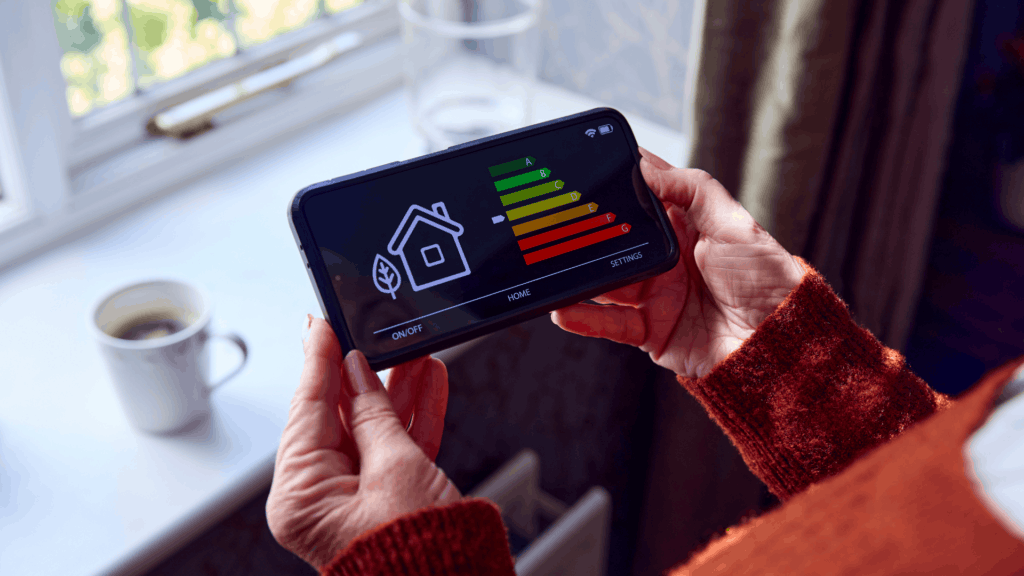
The National Energy Foundation (NEF) this week published findings following the performance evaluation of 30 retrofitted homes based on a year’s worth of monitored data where multi-measure packages were deployed.
The assessments took place against NEFs “SuperHomes Rating Scheme” which provides benchmarks of retrofit achievement and was designed with funding support from the MCS Charitable Foundation. For details see SuperHomes – TECHNICAL SUMMARY OF REQUIREMENTS 2022. The rating scheme comprises five levels of performance with attainment of the highest level, five, representing a true retrofit exemplar with zero emissions or even energy positive home performance.
All homes in the study were privately owned and predominantly located in the South of England. Most were retrofitted in the last four years following provision of a NEF retrofit plan, although several were completed further back. Paul Ciniglio NEF’s Head of Whole Home Retrofit said, “The release of these findings marks the culmination of a lot of hard work and dedication on the part of both our team and participating homeowners. It has taken us three years to get to this point of having a meaningful cohort of retrofitted homes performance evaluated. From the recommendation of retrofit measures, through the design and installation process, to getting monitoring kit in place to collect a year of data under occupation and finally evaluating it has been a long journey, but we are delighted to now be in a position to share these valuable findings”.
The ‘SuperHomes Rating Scheme’ assesses household energy consumption, carbon dioxide emissions, occupant comfort and running costs, Ciniglio refers to these as the four ‘C’s essential for a holistic appraisal of retrofit outcomes. He explains that “The rating scheme rewards actual measured performance rather than theoretical predictions making it credible. A home achieving any rating from one to five is an achievement to be celebrated. We recognise that homes are often constrained in some way as to their retrofit potential. While it would be great for all retrofitted homes to attain level five, this simply isn’t realistic at present, but the rating scheme provides a range of performance levels offering something all homeowners can aspire to and contributing to a reduction in their environmental impact and improving living conditions”.
The monitoring and evaluation study entailed each home having its annual emissions and space heating demand (a measure of overall fabric efficiency performance) calculated based on a combination of automatic or manual meter readings being recorded every three months by homeowners. In addition, the internal environmental conditions were assessed in relation to promoting occupant health and comfort using two sensors located in the main living space and principal bedroom. The sensors used remote data recording where local signal strength permitted or simple data loggers with readings of indoor temperature, relative humidity and air quality collected every minute.
Following thorough evaluation of the data gathered, homeowners were interviewed where possible to corroborate the monitored data with their lived experience. Each household was then issued a report providing insights of their home’s post retrofit performance.
Through the collection and analysis of this data, both NEF and homeowners were able to gain a clear understanding of each home’s performance. This in turn allowed us to compare the measured outcomes with the ‘SuperHomes Rating Scheme’ and award SuperHomes© certificates for each home against the 1 to 5 performance levels.
Overall, the results have been very impressive. Reuben Whyatt NEF Project Officer was responsible for the detailed analysis remarked “We have seen an even distribution of performance with most homes achieving level 1 to 3 rating, although five homes reached performance levels 4 and 5 which is highly impressive and demonstrates the benefits of the SuperHomes initiative. Homes with good fabric insulation and equipped with their own renewable energy systems consistently rated highest as would be expected”.
NEF is keen to share a summary showing the range of findings recognising retrofit performance data remains in short supply and a culture of measurement is needed in the sector to ensure the desired outcomes are being achieved. The summary can be found here and includes a RAG review regarding health and home comfort representing if there were major, minor or no concerns in performance.
The health and comfort data that NEF shared with residents was found to be welcomed as in almost all cases it revealed something that the homeowner was not aware of, be this poor indoor air quality, high humidity or periods of ‘overheating’ in summertime. This has led to some residents reviewing and changing the way they ventilate their home to prevent mould growth and potential negative impacts on health. Wyhatt remarks, “A common finding of the study which we weren’t entirely surprised to identify, is that inadequate home ventilation strategies are relatively commonplace, and this remains an issue that the sector needs to get to grips with. It was pleasing that through sharing evidence in cases of poor ventilation, several residents immediately acted to make improvements and change the way they ventilate their home to prevent mould growth and potential negative impacts on health, and this shows the positive impact the monitoring programme has had”.
One SuperHomes homeowner who participated in the study feedback “I would have done the monitoring out of my own curiosity, so it was welcome that NEF had the chance to offer to undertake it for me independently. Having done the retrofit work ourselves at significant expense and effort, it means a lot to us that we have achieved and been rewarded with a standard by a credible external organisation. There was an element of our thinking at some point we will sell the home and that the SuperHomes rating might translate into value. The potential to add value to a house is a no brainer.”
Having completed the pilot, NEF plans to refine and improve its approach. Whyatt says “We have learnt a great deal through this process and wish to build on its success. We have already decided to change our Space Heating Demand metric to a Smart Heat Transfer Coefficient as a more accurate in-situ measurement of fabric performance and helping to present heat pumps more favourably in retrofit plans. We are also reviewing our options for the monitoring kit going forward with a view to making the process completely remote and enhancing the user interface with real time data and crucially all at an affordable price to the customer”.
Of greatest importance to NEF, Ciniglio asserts “The study has confirmed that the SuperHomes Rating Scheme methodology has proven itself to have been appropriately designed and supports the original research carried out during its creation a few years ago. We are delighted by the findings which suggest that on average, a SuperHome, as compared to a typical UK home, produces 85% less emissions and requires just a third of the energy to heat on an annual basis while promoting better living conditions”.
NEF’s Operations Director Alison Vickers said “We are proud to have certified the first of a new generation of SuperHomes since the initiative started two decades ago. Our findings from the study are timely as we are aware of the ongoing work around EPC reform and a call to accommodate health and well-being. Our chair of Trustees Jade Lewis coordinates the ‘Healthy Homes and Buildings’ APPG coalition so we are pleased that this study will contribute to their important work”.
For more information about SuperHomes and the rating scheme contact superhomes@nef.org.uk Please note that at present NEF wishes to offer retrofit performance evaluation services only as part of scalable regional retrofit projects to add value and does not at this time propose to offer the assessments to individual homeowners.