As our cities have grown, we have unthinkingly moved towards the Le Corbusier Radiant City, with an urban sprawl of ‘operation-based’ zones – with separate areas for work, living, shopping, and entertainment. Maybe it feels tidy to have homogenous zones full of office blocks that look the same. Maybe we feel safe living in suburbia, with houses that look like ours all around us. Or maybe we just never really thought about it – as in the notorious Easterhouse of Glasgow, which was first built with no infrastructure to support the people living in the swathes of new homes.
The argument for neighbourhoods with everything needed for daily life within walking or cycling distance is growing. Not only do we need to radically cut down our carbon emissions, but the health, social and economic benefits are glaringly obvious to anyone who has lived in an environment where the only option when they want to nip out to get milk is to jump in the car.
The concept of the 15-minute city has a history in Clarence Perry’s ‘neighbourhood units’ of the 1920s. Neighbourhood units sprung from the danger of the vehicles, which were embraced by the residents of New York City – with the idea being to have everything each neighbourhood needs within walking distance, particularly parks and schools for children. Aspects of this concept were adopted in city planning and are still a park of urbanisation in cities across the US.
The idea of a 15-minute city has been studied and conceptualised in various forms since the turn of the 21st Century – Kent Larson focused on technology, Weng on the health benefits of citizens walking and cycling their way around their daily lives, Da Silva et al. on the accessibility aspects.
Moreno’s 2021 study was the most comprehensive one yet. He first proposed the idea in 2016 and then published his paper in 2021, accelerated by the global pandemic and its effects on health and equality around the world. When this paper was published, bicycling was becoming a more significant part of moving around cities worldwide – Berlin introduced two extra bike lanes, NYC saw a 67% increase in bike use, and Beijing had a massive expansion of 150% of cyclists.
Moreno’s image of a 15-minute city is one in which six essential functions of daily life should be accessible within a 15-minute bike ride or walk for all citizens: living, working, commerce, healthcare, education and entertainment. The dimensions that need examination in the planning and building of a 15-minute city are as follows:
- Density: rather than building high rise flats or office buildings, when planning a 15-minute city, it is essential to examine how many people can be sustained per sq. km. This is likely to be different depending on the location and culture of the city, but it is something that needs to be worked into planning if the city is to be sustainable.
- Proximity: this is about spatial and temporal proximity, all the services/dimensions of daily life being within walking or cycling distance, thus, reducing wasted time on commuting and improving health.
- Diversity: both diversity of types of buildings and people and cultures are important to the 15-minute city. Multicultural neighbourhoods promote tourism, merging of cultures and economic vibrancy.
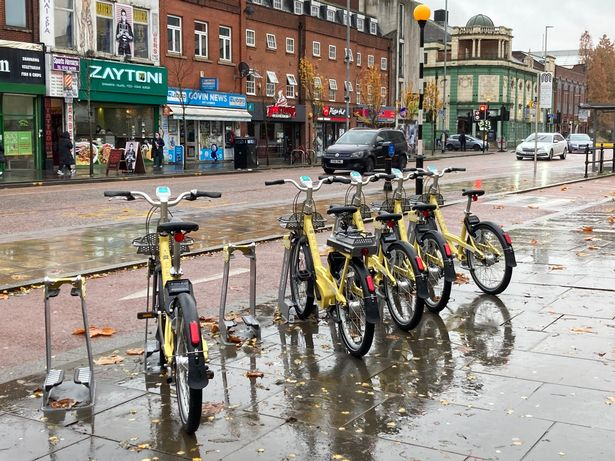
- Digitalisation: digital solutions are vital to the 15-minute city, allowing, for example, the use of bike-sharing platforms, online shopping and working from home.
This examination of the 15-minute city was published in conjunction with aspects of the concept being put in place – also accelerated by the global pandemic. In Paris, Mayor Anne Hidalgo made the ‘la Ville des Proximités’ a part of her election promise. She has since been implementing elements of it with programs such as converting school playgrounds to parks after hours. In Lagos, schools were converted into food markets to prevent panic buying during the pandemic. Bogotá implemented 84km of bike lanes, creating the largest bicycle lane network of its kind in the world. Before the pandemic, Melbourne started implementing plans for 20-minute neighbourhoods and new bike lanes. Portland developed plans for complete neighbourhoods aimed at tackling obesity and supporting youth in under-served communities.
The C40 knowledge hub helps city officials to create greener, healthier cities and promotes the 15-minute city – so the help and advice is there for urban planners. While being less dependent on cars has the apparent benefits of less carbon consumption and saving on fuel, the benefits go much deeper than that:
- Health: promoting walking and cycling where possible in our everyday lives will have positive impacts on our physical health and issues like obesity and our mental health – the bilateral stimulation of walking is proven to be good for our health. Along with cleaner air, this effect is amplified.
- Disability equality: a more accessible city with the requirements of daily life and medical care in closer proximity is beneficial to people with physical and psychological disabilities.
- Economic: shopping locally helps promote a circular economy, and spending less time commuting also benefits the economy as we save so much wasted time.
- Equality: women, children, people with disabilities and the elderly have traditionally not been consulted in the planning and building of cities. 15-minute cities provide more opportunity for children to be able to walk to school and have more time outside in green spaces, for elderly people to stay local when they need more support and for primary parents (usually women) to have more independence as they can access work, commerce and healthcare without a car.
- Social ties and a sense of community: staying local to our communities helps us build connections – with neighbours, local business owners, colleagues who live close by, and fellow parents at the play park. These social ties are vital to our physical and mental health. The last few years of periodic isolation and uncertainty have proven we need this more than ever.
With urbanisation increasing rapidly, we need to build local thinking and aspects of the 15-minute city concept into our cities at the planning stage. It is predicted that by 2030 we will have 43 megacities (cities with more than 10 million people) and 68% of the world’s population living in cities by 2050 – we can’t keep going as we have been and then retrofit 15-minute cities once it is already too late. We must start adjusting the cities we live in now whilst changing the way we build urban areas to decrease our energy and carbon spend and improve our social, cultural, and economic outlook.
References:
https://www.sciencedirect.com/topics/social-sciences/urban-sprawl
https://en.wikipedia.org/wiki/Ville_Radieuse
https://www.theglasgowstory.com/story/?id=TGSFG04
Lawhon L.L. (2014) Neighborhood Unit. In: Michalos A.C. (eds) Encyclopedia of Quality of Life and Well-Being Research. Springer, Dordrecht. https://doi.org/10.1007/978-94-007-0753-5_3335
https://www.sciencedirect.com/science/article/pii/S2214140518305103
Capasso Da Silva, D.; King, D.A.; Lemar, S. Accessibility in Practice: 20-Minute City as a Sustainability Planning Goal. Sustainability 2020, 12, 129. https://doi.org/10.3390/su12010129
Moreno, C.; Allam, Z.; Chabaud, D.; Gall, C.; Pratlong, F. Introducing the “15-Minute City”: Sustainability, Resilience and Place Identity in Future Post-Pandemic Cities. Smart Cities 2021, 4, 93-111. https://doi.org/10.3390/smartcities4010006
https://tomorrow.city/a/paris-the-15-minute-city
https://www.dezeen.com/2021/10/26/15-minute-city-carlos-moreno-obel-award/
https://www.tvcnews.tv/2020/03/covid-19-lagos-flags-off-makeshift-food-markets-at-schools/
https://www.portlandonline.com/portlandplan/?a=437441&
https://www.planmelbourne.vic.gov.au/current-projects/20-minute-neighbourhoods
https://www.weforum.org/agenda/2018/10/mapping-the-world-s-new-megacities-in-2030/