Cities have always been busy and densely populated. People flock there for work, or the opportunities that come for socialising and entertainment. However, in the modern world, a big population comes with big traffic issues, especially if many people are trying to drive cars. This can be a particular problem in older cities that were never designed to accommodate cars –- narrow streets and one way systems can quickly lead to a build-up.
Bikes can come in here as a potential solution for both reducing traffic and reducing carbon emissions. They allow people to move quickly around a compact city space, and do not emit greenhouse gases into the atmosphere. This benefits our health as well as the planet – along with walking, they’re set to offer £20-100 million worth of air quality benefits over the coming years.
Unfortunately, cycling in cities can be dangerous and inconvenient without the right infrastructure to support it. Here, we take a look at what cities need to do in order to get people feeling the benefits of pedal power.
Bike lanes
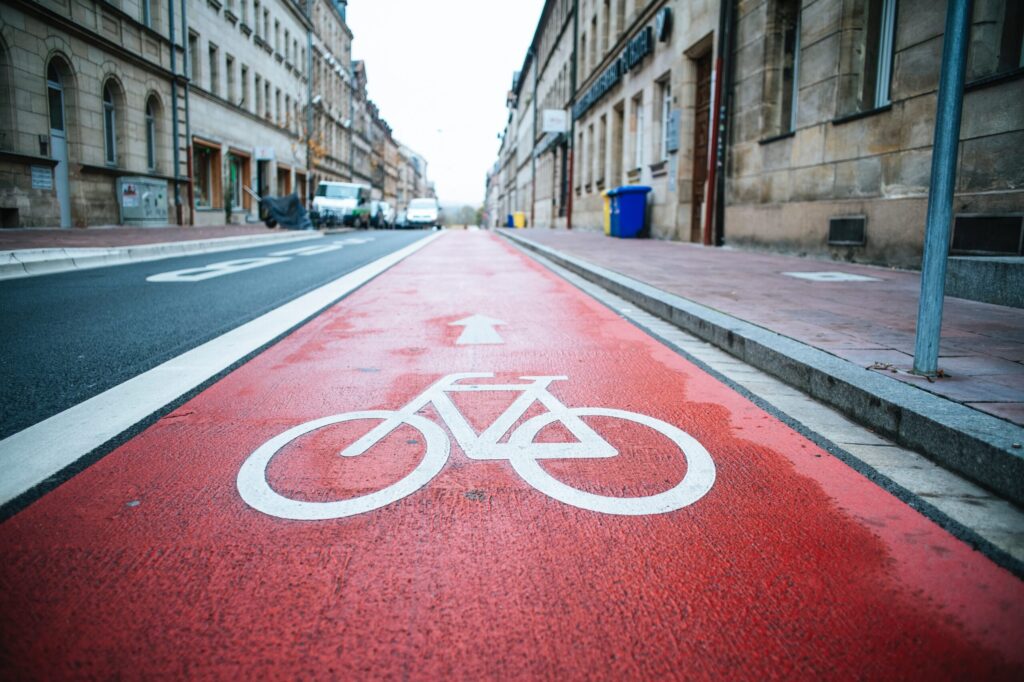
Separating bikes from cars and other vehicles is the first step towards ensuring that cyclists can pedal freely and safely. Not only do they reduce the risk of an accident for cyclists, but research has found that bike lanes can actually reduce accidents on the road overall. This is because bike facilities act as a calming measure on the road traffic.
Lanes with physical barriers are often better than lanes that are just marked out on the road. These segregated lanes mean that cyclists aren’t pushed into the road by other cyclists, nor can cars nudge their way into the cycle lane. They can also be reassuring for parents who are trying to cycle with their children. Multi-use lanes for pedestrians and cyclists can initially be perceived as a good use of space, but they often don’t account for one party getting accidentally pushed into the road.
Ideally, bike lanes should have enough room for cyclists to overtake safely, rather than just being single file.
Bike traffic lights
These small traffic lights sit at eye height for cyclists, so there is no confusion when it comes to who should be going. They turn green slightly earlier than the main traffic lights at junctions, so that the cyclists can get a head start on the cars. This means that cyclists can carry straight on at junctions without the danger of cars turning into the road that they are crossing, and knocking them off their bike.
Bike lights are already a common sight in European cities such as Copenhagen. They increase the predictability of who is going where in a busy environment, and make for a better experience for cyclists and vehicle users alike.

Bike storage
Having safe, accessible bike storage is essential for cities that are adapting for greater bike use. Imagine if you were uncertain about whether your car would be there when you get back from every journey – you’d never use it. Whilst bikes are less expensive than cars, that doesn’t make them any less valuable to their owners as a method of transport.
Businesses should make sure that they have plenty of storage options for their employees, so that cycling is a viable commuting option. Additionally, there should be plenty of bike parking in public places, such as at train stations and supermarkets, as well as near parks and shops. In public places, this storage may need to be outside and just consist of a range of bike racks, but in private office car parks, companies should look to go the extra mile.
Bike storage rooms that are locked with a keycode can reassure employees that only their colleagues will be able to access the bikes, as well as keeping them dry. Offices should also ensure that there are changing areas for employee use, and lockers for storing sweaty gear.
To sum up
In any sustainable modern city, cyclists should be treated as a priority, and their safety incorporated into the city design. Whilst bike lanes might be a little trickier to incorporate quickly, they should be added wherever possible and included in any new road designs as a city expands. Bike lights and bike storage can be added to existing infrastructure at relatively little cost, but they make a big difference when it comes to the uptake of cycling as a method of transport.