


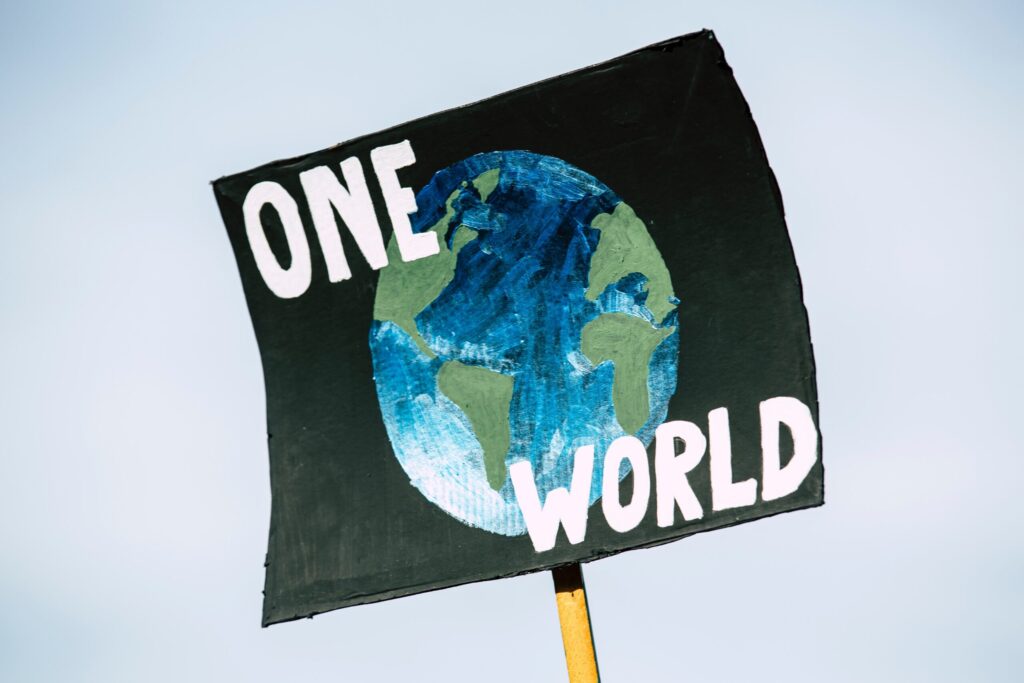
COP26: It’s not just about politicians
Between the 31st of October to the 12th of November, parties from around the world will meet in Glasgow to attend the 26th UN Climate Change Conference of the Parties, also known as COP26 (1). This important conference will provide a forum for climate change action, with world leaders, companies, media, research groups, environmental groups, and many more attending to discuss how climate goals can be reached (1,2) This represents a critical opportunity to help negotiate the next steps in tackling climate change.
The aim of the UN’s COPs is to draw in a wide range of representatives, from business owners to international political coalitions, to negotiate how the Paris Agreement can be accelerated (2). Here, attending national leaders will submit reports on their countries’ current emissions and the efforts they are taking to reduce these (3), and further plans will be negotiated (2). Through laying out key climate change goals and engaging with a vast variety of delegates, COP26 aims to enhance international climate action, important in a year of major climate crises.
Why is COP26 Necessary?
Climate change is a global problem. This year has already brought some notable extreme weather events, including heatwaves and wildfires in North America (4) , Greece (5) and Turkey (6), and disastrous flooding in Germany and China (7). Additionally, the IPCC’s recent report has warned of increased climate extremes because of anthropogenic climate change8.
COP26 is particularly concerned with limiting global warming to 1.5OC above pre-industrial levels (2). Exceeding this threshold could enhance numerous climate change hazards, bringing increased heat and rainfall extremes, drought, flooding, wildfires, and tropical storm frequency (9). Additionally, a continued overshoot of the 1.5OC target could hamper attempts to tackle climate change. For example, increased wildfires will simultaneously release CO2 and reduce carbon capture in trees (10), and the thawing of permafrost may release vast amounts of CO2 and methane, worsening climate change and facilitating further thawing in a cycle (11). Moreover, increasing climate change is likely to worsen global poverty, with the developing world most vulnerable to climate change impacts, particularly subsistence farmers, those living in flood-prone areas (12), those in areas of low food security, and those at risk of infectious diseases, such as malaria (13).
Additionally, there is concern over whether countries will be able to fulfill their commitments to reducing carbon emissions, agreed in the Paris Agreement in 2015’s COP21. Earlier this year, the UNFCCC published a report synthesising the measures taken by 75 countries to tackle emissions, as reported in their Nationally Determined Contributions (NDC) reports, finding that on current trajectories, emissions will only be reduced by around 1% by 2030 (14). To limit global warming to 1.5OC, it is believed an emissions reduction of 45% will be required by 2030, and the parties submitting NDCs only contribute ~30% of global emissions (14). This demonstrates the need for international discussion and the promotion of action and participation between and within countries.
How Sustainability Can Help
In the UK, there are countless ways at all levels in which we can help to tackle climate change. The principal method, a reduction in carbon emissions, can be brought about by reducing reliance on unsustainable fossil fuels – currently, wind, solar, and plant biomass energy sources contribute the largest shares of UK renewable energy, though fossil fuel use has increased in 2021 (15). Nonetheless, these sources of energy are likely to prove key in tackling climate change and preventing the overshoot of the 1.5oC target (16). However, COP26 aims to engage with energy users at all scales of society, and therefore acts on the local scale is also highly important. On a smaller scale, improving the energy efficiency of households such as through insulation and improved windows may reduce carbon emissions associated with heating use (17). Such improvements are becoming more accessible, with the availability of the Green Homes Grant (18), the implementation of which is being aided by the National Energy Foundation (19). Furthermore, a reduction in household waste may also be beneficial in reducing carbon emissions (20) – charities such as FoodCycle (21) are key drivers of this strategy, and bioenergy sources are also utilising waste to generate a significant proportion of the UK’s renewable energy (15).
Overall, it has yet to be seen what conclusions will be made at COP26, and how world leaders will set about furthering the global effort to tackle climate change, particularly among the energy, agricultural and industrial sectors.
Nevertheless, it is imperative that local action is also implemented, and there any many ways in which we can get involved in this.
References
1 ‘COP26 Explained’ (n.d.), UN Climate Change Conference UK 2021, available at https://ukcop26.org/ (date accessed: 10/09/2021)
2 ‘What is a COP?’ (n.d.), UN Climate Change Conference UK 2021, available at https://ukcop26.org/uk-presidency/what-is-a-cop/ (date accessed: 10/09/2021)
3 ‘Full NDC Synthesis Report: Some Progress, but Still a Big Concern’ (2021), UNFCCC, available at https://unfccc.int/news/full-ndc-synthesis-report-some-progress-but-still-a-big-concern
4 ‘2021 North American Fire Season’ (2021), Center for Disaster Philanthropy, available at https://disasterphilanthropy.org/disaster/2021-north-american-wildfire-season/ (date accessed: 16/10/2021)
5 Psaropoulos, J. (2021), ‘Greek wildfires devasted land. They also took away livelihoods’, Aljazeera, available at https://www.aljazeera.com/news/2021/9/20/greeces-summer-wildfires-threaten-professions-with-extinction (date accessed: 16/10/2021)
6 ‘2021 International Wildfires’, Center for Disaster Philanthropy, available at https://disasterphilanthropy.org/disaster/2021-international-wildfires/?gclid=CjwKCAjw8KmLBhB8EiwAQbqNoMBCI2hZaOfqpGJ63R_DX0XXfZuLc5XWf9aXl_JX2ycEI6MuxcBoUxoCW6sQAvD_BwE (date accessed: 16/10/2021)
7 Aravindan, A. and Mackenzie, J. (2021), ‘From China to Germany, floods expose climate vulnerability’, Reuters, available at https://www.reuters.com/business/environment/china-germany-floods-expose-climate-vulnerability-2021-07-22/ (date accessed: 16/10/2021)
8 IPCC (2021), ‘Summary for Policymakers. In: Climate Change 2021: The Physical Science Basis. Contribution of Working Group I to the Sixth Assessment Report of the Intergovernmental Panel on Climate Change’, in Masson-Delmotte, V., P. Zhai, A. Pirani, S. L. Connors, C. Péan, S. Berger, N. Caud, Y. Chen, L. Goldfarb, M. I. Gomis, M. Huang, K. Leitzell, E. Lonnoy, J.B.R. Matthews, T. K. Maycock, T. Waterfield, O. Yelekçi, R. Yu and B. Zhou (eds.), Cambridge University Press (In Press).
9 Rummukainen, M. (2012), ‘Changes in climate and weather extremes in the 21st Century’, WIREs Climate Change, 3, pp.115-129, doi: 10.1002/wcc.160
10 Loehman, R.A. (2020), ‘Drivers of wildfire carbon emissions’, Nature Climate Change, available at https://www.nature.com/articles/s41558-020-00922-6 (date accessed: 16/10/2021)
11 MacDougall, A.H., Avis, C.A. and Weaver, A.J. (2012), ‘Significant contribution to climate warming from the permafrost carbon feedback’, Nature Geoscience, available at https://www.nature.com/articles/ngeo1573 (date accessed: 16/10/2021)
12 Hallegatte, S., Fay, M. and Barbier, E.B. (2018), ‘Poverty and Climate Change: Introduction’, Environment and Development Economics, 23 (3), pp.217-233, doi:10.1017/S1355770X18000141
13 ‘Climate change and health’ (2018), WHO, available at https://www.who.int/news-room/fact-sheets/detail/climate-change-and-health (date accessed: 16/10/2021)
14 ‘“Climate Commitments Not On Track to Meet Paris Agreement Goals” as NDC Synthesis Report is Published’ (2021), UNFCCC, available at https://unfccc.int/news/climate-commitments-not-on-track-to-meet-paris-agreement-goals-as-ndc-synthesis-report-is-published (date accessed: 25/10/2021)
15 Department for Energy, Business & Industrial Strategy (2021), ‘Energy Trends, UK, April to June 2021’, GOV.UK, available at https://assets.publishing.service.gov.uk/government/uploads/system/uploads/attachment_data/file/1021952/Energy_Trends_September_2021.pdf (date accessed: 16/10/2021)
16 Nakicenovic, N., Alcamo, J., Davis, G., de Vries, B., Fenhann, J., Gaffin, S., Gregory, K., Griibler, A., Jung, T.Y., Kram, T., Lebre La Rovere, E., Michaelis, L., Mori, S., Morita, T., Pepper, W., Pitcher, H., Price, L., Riahi, K., Roehrl, A., Rogner, H-H., Sankovski, A., Schlesinger, M., Shukla, P., Smith, S., Swart, R., van Rooijen, S., Victor, N. and Dadi, Z. (2000), Special Report on Emissions Scenarios, Press Syndicate of the University of Cambridge, Cambridge, UK
17 Adua, L. (2020), ‘Reviewing the complexity of energy behavior: Technologies, analytical traditions, and household energy consumption data in the United States’, Energy Research & Social Science, 59, 101289
18 Department for Business, Energy and Industrial Strategy (2021), ‘Green Homes Grant: make energy improvements to your home’, available at https://www.gov.uk/guidance/apply-for-the-green-homes-grant-scheme#what-the-voucher-can-be-used-for (date accessed: 16/10/2021)
19 ‘Green Homes Grant LAD’ (n.d.), National Energy Foundation, available at https://nef.org.uk/project/green-homes-grant/ (date accessed: 16/10/2021)
20 Barrett, J. and Scott, K. (2012), ‘Link between climate change mitigation and resource efficiency: A UK case study’, Global Environmental Change, 22 (1), pp.299-307
21 ‘FoodCycle’s Impact’ (n.d.), FoodCycle, available at https://www.foodcycle.org.uk/who-we-are/foodcycles-impact/ (date accessed: 16/10/2021)





