


If you want to update an out of date or expired Energy Performance Certificate (EPC), you may be in for a nasty surprise. You may get a worse one, even if you have added numerous improvements to your house.
Five years ago, our children told us to downsize. So we did. We bought a 5 year old south-facing house, to which we added a 4 kWh solar PV array. We also added an Energy Recovery gadget (also known as a power diverter or Solar PV optimiser) which heats our hot water from the solar PV throughout the year, so we do not buy gas for hot water. Apart from that we added a porch before the front door which reduced heat loss, and an unheated conservatory on the south side which is thermally insulated from the rest of the house. However the conservatory is capable of heating the whole house on a sunny day in winter if we open the French window from the sitting room. In addition, extra roof insulation was added to the roof space, and all the lighting was changed to low energy.
But our energy suppliers would not believe our lower consumption, so we had to call in the ombudsman, who ruled in our favour, and we got over £800 back. We then changed our energy supplier.
But the biggest change came when we installed batteries in February 2017. Since then we have not drawn any electricity from the grid, which meant that our new energy supplier reckoned that our meter was faulty. They changed the meter, and we are still not buying electricity.
The original EPC expired in August 2018, so, as we are both in our late 80s, we applied for a new one to save our children trouble when we leave this world.
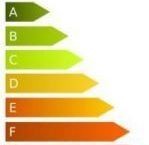
The assessor came, and duly awarded us a rating of 75. This was lower than the original rating of 77, but still a C rating. So I complained, and 9 days later I found that my rating had been changed to 90. 90 is a B, and just two points below an A rating.
Looking into the reasons for this sudden change, the only ones I could find were that the porch and the conservatory had been treated as extra space to be heated, instead of extra insulation. The extra roof insulation had not been taken into account either.
Nevertheless the latest EPC still says that my “Estimated energy costs for this home” at £1,887 over 3 years. This is actually just over twice what I am actually paying my energy supplier, where I am £235 in credit. But you get a ready answer to this: The costs of energy are going to go up, and, “the figures are always based on the same assumption – that the property will be heated for 9 hours per day for 5 days per week, and 16 hours per day for 2 days per week.” In other words, for a house inhabited by working families. But my wife and I are retired, and live in the house almost all the time. So this argument does not add up either. The other part of the assumption is that the living room will be heated to 21 degrees and other living spaces to 18 degrees. If the house is heated to a lower temperature than this assumption will not give an accurate calculation
But the biggest reason for the difference is that the “methodology” used by assessors is that neither the Powerflow batteries, nor the Powerflow Energy Recovery System I have installed are accepted by the “methodology”. Yet putting those two items into my system have given me the greatest energy savings of them all.
So if, or when, the government recognises batteries, we ought to get an A.
Carefully adding to your house’s eco credentials can pay large dividends. Before putting in batteries, I worked out that my Return on Investment (ROI) was just over 15%, which is better than you get anywhere else at the moment. But the ROI after putting in my Powerflow batteries must be even better, because we have now almost completely eliminated our buying of electricity.
EPCs, which are legal documents, do not realise this. You need them when buying, selling or renting houses. You also need an EPC with a D rating or better if you want to claim Feed in Tariff after installing solar PV.
In the latter case, do not do as I did. Do not ask the estate agent who sold you the house for an EPC. Mine charged me 3 times the going rate, and I ended up with an assessor who gave a wrong reading. Instead, ask the firm you have chosen to install your solar PV, or go to the Government’s register of assessors to be found at https://www.epcregister.com/searchAssessor.html
Here at YouGen we will ocassionally accept blog contributions from our readers if they are interesting, relevant and abide by our writing guidelines. These articles represent the views of individuals and do not necesserily reflect those of YouGen or NEF.





