


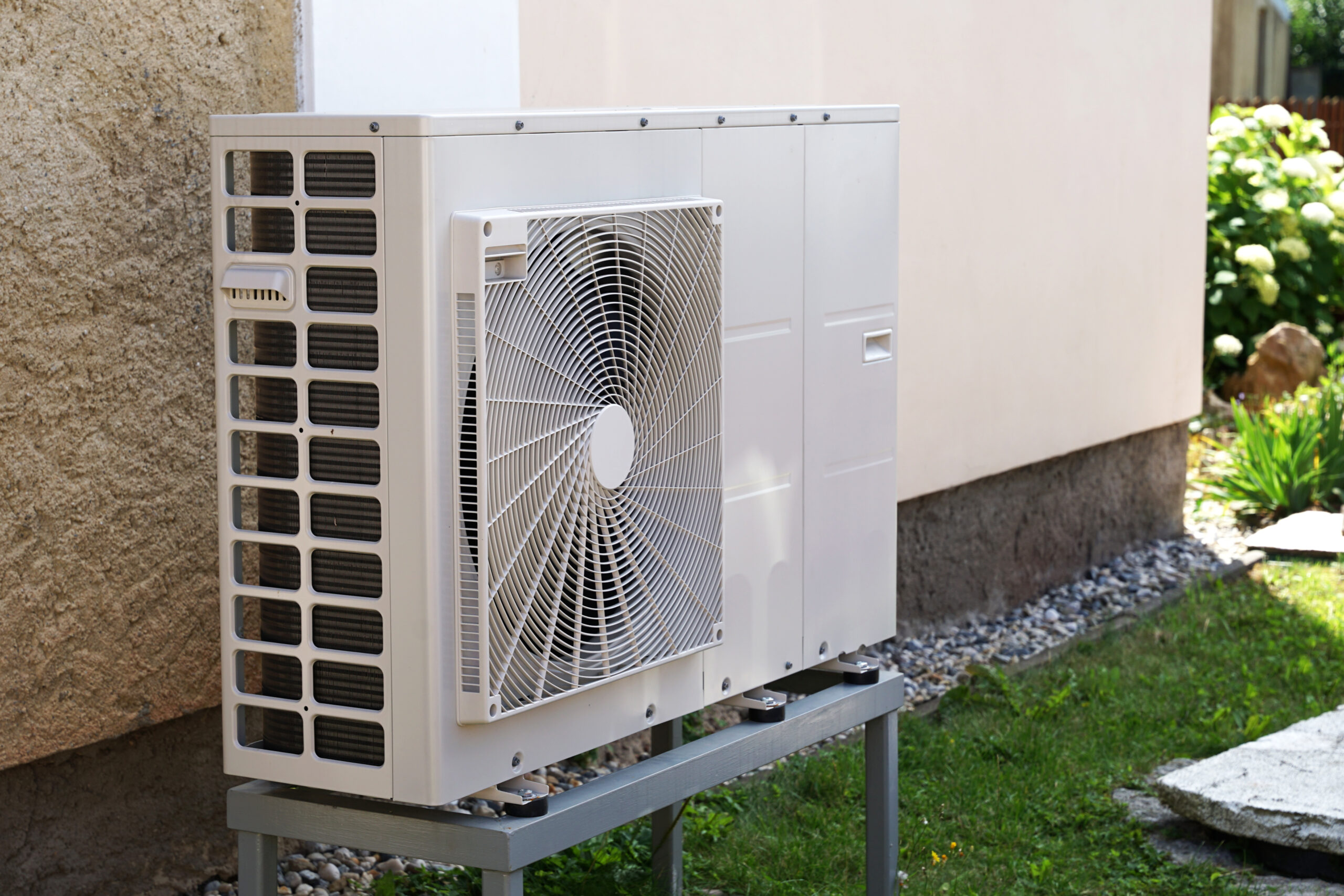
A heat pump, in simpler terms, is similar to how a fridge works.
There are two units to a heat pump, an internal unit, and an external unit. It mostly consists of fans, radiators, refrigerants, and pressure valves. During summertime, to cool the air inside your house, the heat inside your room is transferred into the refrigerant inside your radiator through a fan, which by moving the heat away, cools down your room. As the refrigerant is now slightly warmer, it then moves towards the compressor, which compresses the refrigerant making it hotter, and heat is then exchanged again at the external unit. The fluid is passed back and expanded which makes the refrigerant cooler and the cycle begins once more. This is better explained with the diagram below.
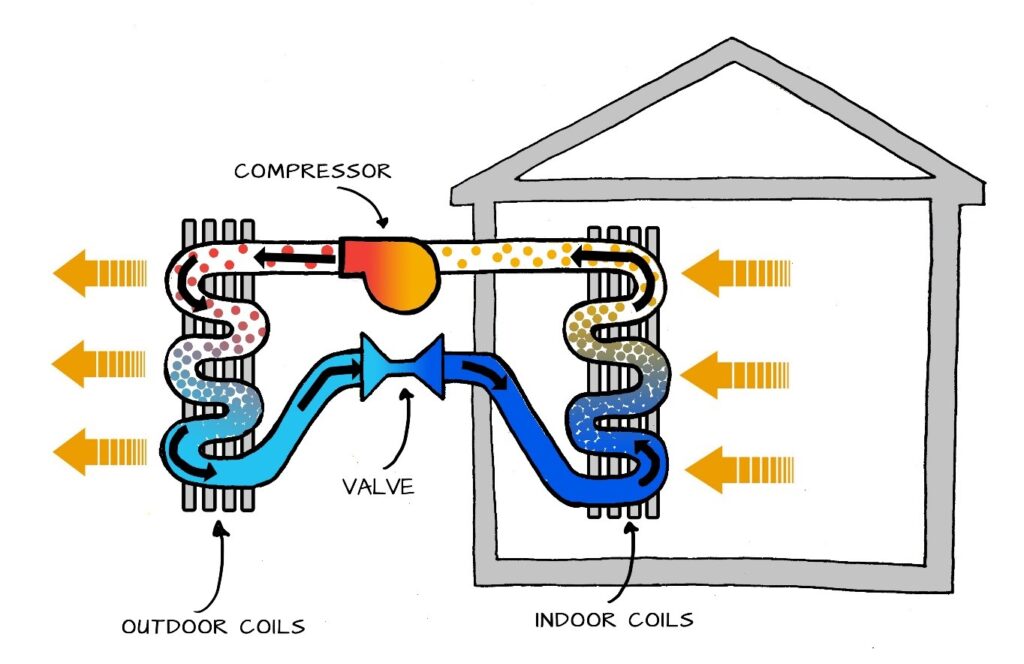
(Diagram 1, function of a heat pump)
During winter, the opposite is true (the flow of refrigerant would be clockwise), although it might seem counter-intuitive to think “How do we get heat if it’s cold outside?” Well, this is a property of the refrigerant itself – ideally, we would want something that can absorb a lot of heat.
They are a lot to consider when making a big purchase like this, and I will try and provide all these pros and cons.
Initial Cons of Heat Pumps:
Pricing
Initially, there will be a hefty upfront cost to installing a heat pump and the investment is slow to return. Furthermore, heat pumps are often only suitable for new housing or houses which have optimal insulation.
Installation
Depending on what kind of heat pump you are looking for, the installation can be quite a big problem, air source heat pumps are the easiest to install. With ground source heat pumps, it is generally installed as floor heating, which could be expensive and time-consuming.
Noise
Because of how a heat pump works, pulling air in and out of the radiator through a fan, it subsequently would make a lot of noise. However, advancements are being made to reduce the noise level.
Fear Not! Pros of Heat Pumps:
Efficiency, COP
The Coefficient of Performance (COP) of most heat pumps are around the range of 3-5, this meant that for every 1 kW of electricity, the heat pump will produce 3-5 kWs of heating or cooling. To put this into perspective, a kettle uses about 2-3 kW, and through some clever engineering in the heat pump, you’re now able to have an extra couple of cups of tea because of the energy saved.
Pricing
The pricing of the bare minimum heat pump in the UK, including fitting costs, is around £7000 to £9000, however, there are schemes made by the government which help take a load off. They will give you anywhere from £5000 to £6000 to install a heat pump (linked below) This is called the Boiler Upgrade Scheme.
Carbon Footprint and Fuel Dependency
In the current social and economic climate, we are (or should be) constantly striving to lower our individual carbon footprint. Furthermore, with the ongoing war in Ukraine, Britain must realise that we cannot rely on others for our energy sources much longer, as this would only drive our fuel prices up further. By being mindful of our energy consumption and efficiency, we are able to combat this.
Summary
A lot of houses in the UK are old, meaning that the insulations of these housing are probably not as good as modern housing. If this is the case for you, perhaps a heat pump isn’t the best option – you should always seal off a leaky bucket before you add more water. If you were thinking of getting a heat pump installed, you would need professional advice on whether your house would be the right for a heat pump. You could do that right here with the National Energy Foundation’s SuperHomes team, and you can contact them via superhomes@nef.org.uk





