


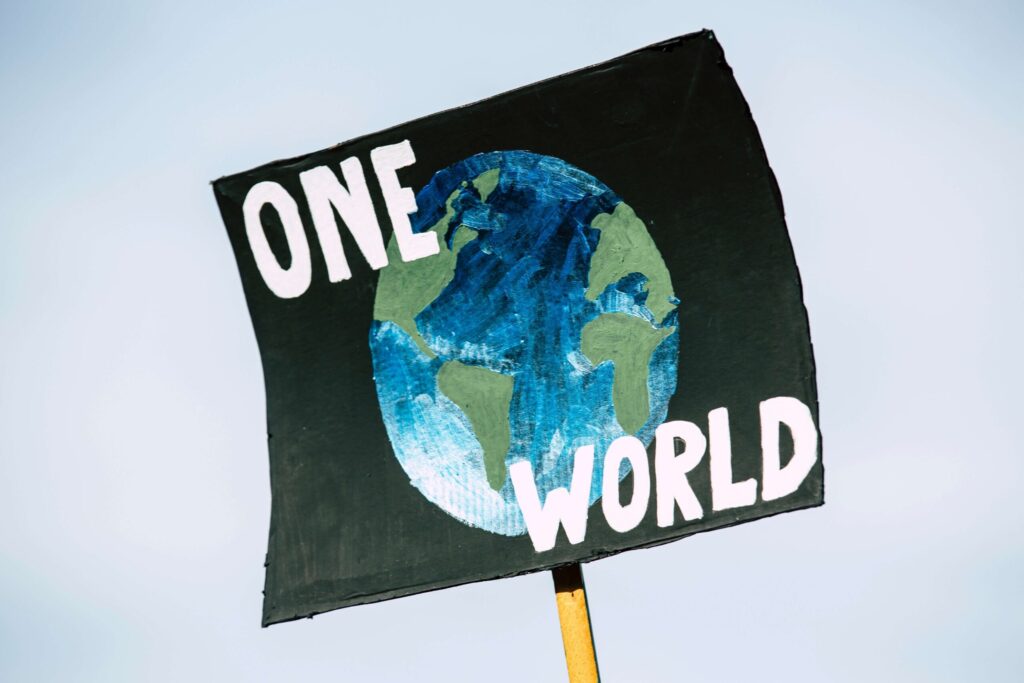
COP26 was the 26th United Nations Climate Change conference, which took place in Glasgow from 31st October to 13th November 2021. The main aim of these conferences is to bring together leaders from countries all over the world in order to create real action to tackle climate change. COP26 felt particularly relevant and important, not only because it was the first time the conference was held in the UK, but also due to the ever-shortening time frames for the serious impacts of climate change. COP26 was at the forefront of news and social media at the time, but nearly six months after the conferenced has passed you might be wondering, what has actually changed?
COP26
Firstly, let’s take a look at what COP26 achieved. The UK Parliament site details the agreements made at the conference, including the Glasgow Climate Pact and the Paris Rulebook. The Glasgow Climate Pact is a ‘series of decisions and resolutions that build on the Paris accord’ and sets out how we can tackle climate change, such as re-emphasising the importance of staying within 1.5C of global heating, as well as welcoming the contribution of the IPCC Sixth Assessment Report, which we will look at again later. Unlike the Paris Agreement of 2015, the Glasgow Climate Pact is not legally binding and doesn’t specify what action each individual country needs to take. The Paris Rulebook essentially sets out to standardise and ensure exactly how each country that signed the Paris Agreement will reduce their emissions, such as by looking at how the countries will report on their emissions and more specific shared timeframes on when it needs to happen by.
Other agreements that came about at COP26 include a commitment from 137 countries to ‘halt and reverse forest loss and land degradation’ by 2030. The Clydebank Declaration was also signed by 22 countries, which looks at how we can reduce the carbon emissions of shared shipping routes. One particular positive highlight of 2021’s conference is that this was the first time that there was an explicit plan to reduce the use of coal, with 190 countries agreeing to phase down coal power, although the focus is on phasing down rather than completely phasing out. Pledges were made by wealthier countries to help developing countries cope with climate change and transition to more renewable energy. World leaders also agreed to phase out subsidies for coal, oil and natural gas, but no firm dates have been set. Despite a number of promising changes that look to be exactly what needs to be done to tackle climate change, we are seeing similar problems crop up repeatedly. The lack of legally binding agreements, country specific requirements and strict dates to work towards may mean that we are looking at more empty promises than real action.
What is the IPCC?
The IPCC is the Intergovernmental Panel on Climate Change, an international body that assesses the science related to climate change. They aim to provide governments worldwide with scientific information about the impacts of climate change, and possible solutions as to how to adapt and cope. They released their Sixth Assessment Report in three sections on the 9th August 2021, 28th February 2022, and 4th April 2022. The timing of these reports has, similarly to COP26, been particularly relevant in allowing millions of people like us worldwide to understand the impacts of climate change, particularly that this isn’t something that will happen in the distant future but something that is actually happening right now. The reports are highly detailed, but they included points about…
- How the poorest people around the world, specifically those in the Global South, are the most negatively affected. This is where the majority of deaths caused by changing climate happen. The impacts are more widespread than previously believed, with over 3 billion people living in situations that are highly vulnerable to climate change.
- The key point is to stay within 1.5C of warming, preferably well below. Every small fraction of a degree matters because the more the warming increases, the less our current tools for reducing climate change will be effective. For example, some trees that are planted to extract CO2 from the atmosphere are simply unable to survive warmer conditions and would therefore become ineffective at tackling climate change. Emissions need to be reduced drastically and quickly in order for us to cope with existing climate change.
What now?
When the UK left the EU, existing laws about protecting the natural environment were no longer valid, so the UK created the Environment Act. The Environment Act became law in November 2021 and it looks at long-term targets for protecting the natural environment through four main methods:
- Air quality
- Biodiversity
- Water
- Waste reduction
Whilst the Environment Act includes some promising goals in terms of using the country’s natural resources to both prevent and reverse climate change, there are a few ways in which the act has been criticised for not doing enough, such as preventing global tropical deforestation in the Amazon rainforest. Since COP26, we have also seen a number of new oil fields in the North Sea being proposed and approved by the UK government. Whilst it is true that the use of all harmful energy sources such as oil and natural gas cannot be stopped overnight, it is worrying that in the midst of an energy crisis and a crucial time in halting the devastating effects of climate change, the government is trying to funnel money into new oil fields rather than prioritising funding the many viable sustainable and renewable alternatives. Environmental campaigners and activists such as those from Just Stop Oil have found themselves largely ignored or criticised by the government for suggesting that new oil fields are out of the question, despite the IPCC reports reaffirming this exactly.
Conclusion
The UK’s hosting of COP26 came at a very important time in our history. In the past couple of years, an increase in the reporting of scientific fact from experts such as those from the IPCC and greater public presence of climate activists has caused a surge in public knowledge about the realities of climate change. We are frequently being reminded that the time to act is now, and this action requires a large amount of input from the government, specifically in the form of strict rules and regulations that must be adhered to. Legislation such as what had been laid out in the Environment Act contains the kind of ambition we need in the UK, but the simple fact is that the UK is not currently on track to achieve net zero by 2030, and we need to not only stick to existing promises but also become even more ambitious about cutting the use of harmful energy in order to reach these goals. It can be easy to feel weighed down by fear about climate change when we hear the facts, but the important thing is to remind yourself that alongside the worrying news there are a great number of possible solutions; we just need the support of governments and policies to put them into action.
Sources
https://report.ipcc.ch/ar6wg2/pdf/IPCC_AR6_WGII_SummaryForPolicymakers.pdf https://commonslibrary.parliament.uk/what-were-the-outcomes-of-cop26/ https://www.bbc.co.uk/news/science-environment-56901261
https://www.clientearth.org/latest/latest-updates/news/why-the-uk-environment-bill-matters/ https://www.theguardian.com/environment/ng-interactive/2021/nov/10/cop26-draft-textannotated-what-it-says-and-what-it-means
https://www.ipcc.ch/site/assets/uploads/2021/07/AR6_FS_What_is_IPCC.pdf
https://www.theguardian.com/environment/2022/apr/04/ipcc-report-now-or-never-if-world-staveoff-climate-disaster
https://naturalengland.blog.gov.uk/2021/11/23/the-environment-act-2021-a-turning-point-fornature/
https://www.gov.uk/government/news/world-leading-environment-act-becomes-law https://news.sky.com/story/north-sea-oil-and-gas-project-gets-green-light-just-months-after-ukhosted-cop26-climate-summit-12531113
https://www.theguardian.com/environment/2022/apr/11/no-10-condemns-guerrilla-tactics-ofjust-stop-oil-blocking-fuel-deliveries





