


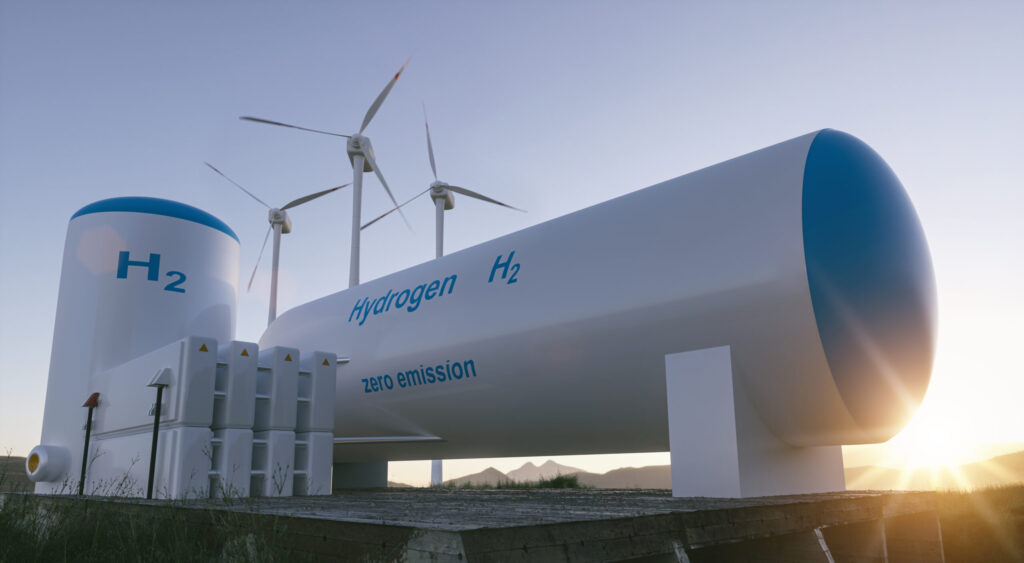
David Cowdrey, Director of External Affairs at MCS Charitable Foundation explores whether hydrogen has a place on the journey to net zero
There has been a lot of discussion around how we should heat our homes, reduce our carbon emissions and how we build new homes to make sure we are helping to tackle the Climate Emergency. For most people in the UK this is going mean a change in the way we heat our homes and facing the reality that we need to move away from carbon intensive fossil fuels like gas boilers, to zero carbon options.
There has been some hype in the media around the government announcement to ban gas boilers in new homes and they have indicated that they will also set a date when gas boilers can no longer be retrofitted to existing homes, which is sensible and helps reduce the nearly 30% of CO2 emissions generated by UK homes.
With more of the grid going green and pledges that by 2030 wind power will be able to power every home in the UK, we should be looking forward to a carbon free future. So, what are the alternative heating options for homeowners?
A number of new, and not so new technologies are being discussed as direct replacements for your gas boiler and there are some pros and cons with all of the technologies as things stand today. Fossil fuel companies are keen to promote ‘blue hydrogen,’ which is made from natural gas, for domestic heating, but there are some major hurdles for them to overcome. Not least that we do not have a hydrogen grid, current production levels are very low and that producing hydrogen is a very carbon intensive process from start to finish. There are also issues with NOx emissions when you burn hydrogen in air (e.g., Hydrogen when burnt in air generates more NOx than Natural Gas), the lack of colour when a flame burns, the fact that hydrogen could be up to four times more expensive1 than natural gas, and hydrogen is not as energy efficient as gas when it burns. The Health and Safety Executive are also concerned about introducing this volatile element into homes and have not approved hydrogen for domestic use yet.
The pro hydrogen lobby are highlighting the positives, which is that hydrogen ready boilers cost just a little more than a gas boiler, but what is not made clear is that this is only for a blended mix of 80% natural gas and up to 20% of hydrogen, which will not help tackle climate change or reach the net zero targets by 2050. If the grid goes to pure hydrogen in the future, and some say it will take as long as 2050 to come about, these so-called hydrogen ready boilers will need a number of parts replacing at the owner’s expense, before they can burn 100% hydrogen. In essence, at present a hydrogen ready boiler is just a gas boiler by another name. But the elephant in the room for me, which the hydrogen lobby is really avoiding, is the running costs for consumers over the lifetime of the appliance. No matter how you look at it, hydrogen is currently two to four times more expensive than natural gas, so adopting this technology may seem cheaper when just looking at a replacement boiler costs on their own, but as consumers we need to consider the lifetime running costs. If hydrogen prices remain high more homes could be forced into fuel poverty.
Other issues that need to be overcome are that hydrogen tends to burn with an invisible flame and has no odour, and hydrogen, being the lightest gas, is prone to leak more and rises which in an unventilated, confined indoor space like a kitchen could accumulate and ignite. These are key safety issues in a domestic environment.
Finally, hydrogen is an expensive fuel to produce and blue hydrogen has a very heavy carbon footprint, relying on yet to be deployed Carbon Capture and Storage (CCS) plants. One recent CCS plant in the USA cost $7.5 billion to construct. The infrastructure to support blue hydrogen, the power needed to release hydrogen atoms and storage issues, and compression and safety issues are all factors making this is an expensive fuel. I expect that it will only play a small role in decarbonising our homes.
I believe that green hydrogen is the only serious area to invest in for the government and will have a major role in the fuel mix in the hard to decarbonise sectors like heavy transport, aviation, shipping and heavy industry. The big wins are using this expensive and rare fuel to really make a huge impact on polluting industries like cement production, chemical production and the steel industry etc, where electrification is not a practical solution. The wins in CO2 reduction and control of a highly volatile fuel under pressure is best used strategically and within controlled environments like industrial processes. My personal conclusion on hydrogen it that it is not suitable for domestic heating2 applications in the next 10 years, the costs of building the infrastructure, running costs etc just do not make this a viable consumer choice at this time.
I firmly believe that blue hydrogen is not the way forward for domestic heating and is a huge white elephant that will consume billions of taxpayers’ money and have no real, or very limited, benefit to domestic users, continuing to prop up the fossil fuel companies. I fully support the adoption and investment in green hydrogen, made from surplus green electricity, but this will not be at scale until 2035, will still be more expensive than natural gas, and will not be appropriate for domestic use3 in the quantities required or deliver the monetary saving fuel consumers expect. It should be used strategically to decarbonise industry and transport that cannot be electrified.
David’s blog continues next week, exploring further how UK homes should be heated.





