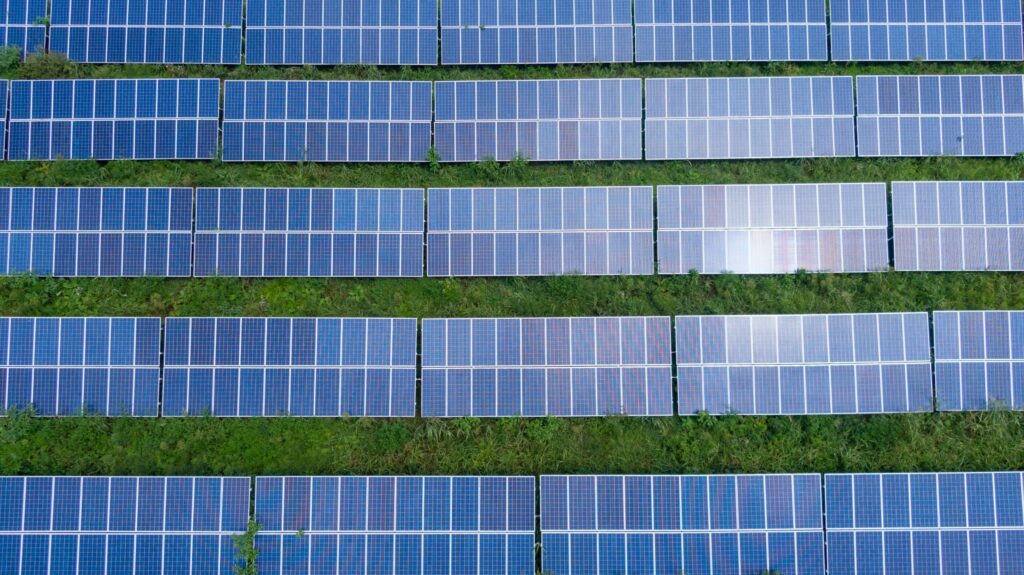
Community energy refers to community-led initiatives which work to reduce, manage or generate energy in a collectively more sustainable way. Community owned heat networks offer the opportunity to maintain heat usage across communities at a lower carbon footprint. This is effective as heat is a major source of carbon emissions. Community heat networks refers to a centralised source of heating which provides heating or hot water to multiple consumers through a shared network.
How do heat networks work?
 The central heat source inputs the heat and there are various technologies which can be used to facilitate this for example, heat pumps, fuel cells, geothermal sources, biomass/biogas fuelled boilers, CHP and solar thermal arrays. The heat is delivered to residents through a series of underground pipes carrying hot water. Residents can access heat using a Heat Interface Unit (HIU) which replaces an individual boiler (and are about the same size as a small gas boiler). Heat is then delivered into each building or property using a heat exchanger. The HIU allows residents to extract heat from the main network into their own central heating system. Heating controls remain the same and the central heating system works in the same way as a traditional domestic gas fired central heating system however, there is no need for combustion to take place (which occurs when a substance reacts with oxygen. When carbon from fuel reacts with oxygen in the air it produces carbon dioxide). A meter and heating control system is installed along with the HIU, allowing consumers to be billed for the amount used as well as potentially control their usage. The generated heat is stored in a central thermal store, until it is required.
Suitable Areas:
Community heat networks benefit areas where there is a high density of buildings in one location. It further helps if the local area is not congested with too many roads and infrastructure as that may get in the way of pipes.
It is in fact beneficial to build a heat network infrastructure into a new development, especially one with space for a central boiler and/ or fuel store.
Benefits
There are multiple benefits for community owned heat networks.
- Social benefits such as community projects like this will improve cohesion within the community.
-
- Heating networks have lower carbon emissions than existing (gas-powered) heating schemes. This will help the government reach its target of net-zero by 2050. Carbon-saving potential increases as more buildings are connected. Furthermore, heat networks are likely to be more efficient than other heating systems.
- This can result in lower energy bills for households. Bill savings of at least 30% have been achieved when replacing electric heaters in tower blocks. Heat networks can help lift some households out of fuel poverty. Customers using heat networks typically pay around £100 less annually than gas customers – even before the cost of purchasing and maintaining a gas boiler is considered.
- For new schemes, design and maintenance is normally provided by one operator, who can continuously monitor the system and follow heat provision in real time, making the process more efficient. They can also help residents to develop a greater understanding of their heat usage resulting in increased efficiency overtime.
- They can capture waste heat and convert it into energy. For example, waste heat from industry/power stations or heat from warm mine water left in old coal mines can be harnessed through community owned heat networks.5
- They also have many economic benefits. Community owned heat networks will drive regeneration and act as a catalyst for local growth. Local jobs will be created in the construction of these networks as well as long-term jobs to maintain these networks increasing employment prospects. A revenue will also be generated through the sale of the energy produced.
Heat networks out and about
 Many properties in rural villages in Sussex and Kent use oil and Liquid Petroleum Gas, which are terrible for both local air quality and carbon emissions.
Brighton & Hove Energy Services Co-operative (BHESCo) is currently working with a number of these communities to develop shared heat networks which can be powered by local renewable energy and delivered through a local microgrid. They believe that air source heat pumps and ground source heat pumps offer a compelling fuel alternative.
Upcoming events
If this is something that has piqued your interest, CREW Energy are hosting an event on the 13th of July 2021 at 6:30-8:00 pm titled ‘Heat pumps for community energy’ This will explore heat pumps in community energy projects in greater detail covering heat pumps in civic buildings, communal heat pumps, domestic offerings, funding solutions, improving the economics of heat pumps, planning considerations, and heat supply agreements. Community Energy England also advertise other community energy related events which you can sign up for here. Community Energy Fortnight takes place every year in June.
Bibliography:
1) (Government, 2013) https://www.gov.uk/guidance/community-energy (Government, 2013)
2) https://communityenergyengland.org/how-to-pages/district-heating (Community Energy England, n.d.)
3) https://blog.switch2.co.uk/blog/the-differences-between-community-and-district-heating (Allan, 2017)
4)https://communityenergyengland.org/files/document/429/1598964152_Community_Heat_Introduction_Document_2.1.pdf (SW, 2016)
5)https://assets.publishing.service.gov.uk/government/uploads/system/uploads/attachment_data/file/696273/HNIP_What_is_a_heat_network.pdf (Department for business,energy and indstrial strategy)
6)https://www.theade.co.uk/assets/docs/resources/Heat%20Networks%20in%20the%20UK_v5%20web%20single%20pages.pdf (Association for decentralised energy, 2018)
7) https://bhesco.co.uk/blog/microgrids-sussex-kent (Bhesco, n.d.)