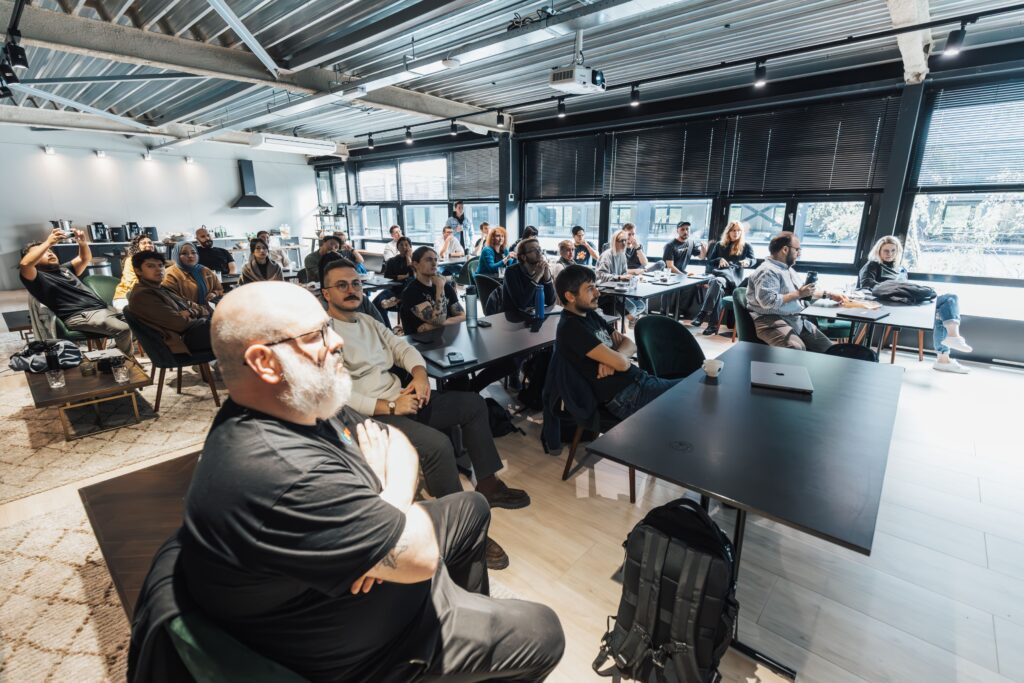
If you’ve had energy efficiency work done on your home through the ECO scheme, and you or someone you care for has dealt with health problems, we want to hear your story. In person, over coffee, paid for your time.
Free workshop. Just two hours. Here’s what you get.
A £55 shopping voucher Up to £10 towards transport;
Refreshments provided ;
Fully wheelchair accessible venue
Where: St Pancras & Somers Town Living Centre, 2 Ossulston St, London NW1 1DF When: Thursday 1 October 2026, 10am to 12noon
Sign up now: Jakob Petersen, 07952031362 or jakob.petersen2@lshtm.ac.uk, or visit lshtm.ac.uk/cosine
Does This Sound Like Your Home?
- Single glazed windows that weep condensation by mid morning
- A boiler running hard and still not keeping up
- A room you’ve quietly stopped using in the coldest months
- A patch of damp that keeps coming back no matter what you do
- Energy efficiency upgrades that made things better, or that didn’t quite deliver
If any of that is familiar, and your health or the health of someone you look after has been affected by it, this workshop is built around people like you. Good experiences and bad ones are both exactly what researchers need to hear.
Why Your Story Matters
Nearly 10 million UK households, roughly one in three, can’t afford to properly heat or insulate their home. The Energy Company Obligation (ECO) is the largest government mandated scheme built to fix that, and it has been running since 2013. But almost nobody has been able to measure what it actually does for people’s health, until now.
This workshop is part of CoSine, a study by the London School of Hygiene & Tropical Medicine looking at whether ECO upgrades change how much people end up needing the NHS. What went well, what didn’t and what would make the process better for the next household. Your two hours could help make that case to the people who decide where funding goes next.
Who Can Take Part
You can join the workshop if you:
- Live, or have lived, in a home that received ECO energy efficiency upgrades, as a private tenant or an owner occupier
- Have experience of health challenges yourself, or care for someone who does
Social housing is covered by separate schemes and sits outside this particular study, so this session is aimed at private renters and owner occupiers.
Sign up now. Contact Jakob Petersen on 07952031362 or jakob.petersen2@lshtm.ac.uk. More info at lshtm.ac.uk/cosine.
What Actually Happens at the Workshop
You’ll be asked to talk through your experience of the ECO process from start to finish, good or bad, and how it affected your health or wellbeing or that of someone you care for. It’s a relaxed, two hour session with refreshments, at a fully wheelchair accessible venue. There’s no test, no jargon, and no wrong answers. You’re the expert in this conversation, not us.
Living in a Cold, Damp Home: The Health Impact
Cold, damp housing is not just uncomfortable. It is a recognised driver of ill health. Damp and mould encourage dust mites and fungal spores that can trigger or worsen asthma and other respiratory conditions, particularly in children and older people. Homes that are difficult to heat push residents toward a well documented choice between heating and eating, and the resulting cold indoor temperatures are linked to raised blood pressure and a higher risk of cardiovascular events over winter. Living with condensation on the windows, a boiler that never quite keeps up, and a damp patch that keeps returning also takes a toll on mental health, particularly for people already managing a long term condition or caring for someone who is.
Cold homes cost the NHS in England an estimated £1.36 billion a year in hospital and primary care, much of it linked to respiratory problems and heart attacks. That is the cost CoSine is trying to measure more precisely, and the reason lived experience of ECO upgrades matters so much to this research.
What Is CoSine? Co-benefits in Health from Sustainable Housing
CoSine stands for Co-benefits in health from Sustainable housing. The name is the question itself: when you do something for the climate, insulating a wall or replacing a boiler, do you also, as a side effect, do something for someone’s health? It’s a circle researchers have long suspected but rarely been able to prove with real world data.
To find out, CoSine is building a secure, household level data link, using London as a case study, between housing records from the Department for Energy Security and Net Zero (DESNZ) and health records from the NHS London Secure Data Environment. Done safely, this makes it possible to see whether an insulated wall shows up later as fewer GP visits or hospital admissions for housing related conditions. The approach will be written up as a handbook so local authorities and other researchers evaluating housing and health interventions don’t have to start from zero.
From ECO to the Warm Homes Plan: What's Changing in 2026
As of 2026, ECO is giving way to new schemes under the Warm Homes Plan, now funded by taxpayers rather than through supplier obligations and green levies. The research itself, using historic data, focuses on ECO. But the workshop is interested in your views on both the scheme that’s ending and the ones replacing it.
How NEF Supports Warmer, Healthier Homes Today
CoSine isn’t the only place this work happens at NEF. Our Better Housing Better Health programme already connects people to home energy advice and practical support when illness makes it harder to stay warm. For households ready to plan a retrofit, our Healthy Homes service offers a free, independent one stop shop, starting with a whole home retrofit plan and helping residents understand their options, costs and funding routes before they commit to any work. For those who qualify, our Warm Homes Local Grant delivers fully funded upgrades directly. You can read more about who we are and what we do on our site.
frequently Asked Questions
ECO is a UK government scheme, running since 2013, that requires energy suppliers to fund energy efficiency upgrades such as insulation, boiler replacements and draught proofing for eligible households.
Anyone who lives, or has lived, in a private rented or owner occupied home that received ECO energy efficiency measures, and who has experience of health challenges themselves or as a carer.
You’ll be asked about your experience of the ECO process from start to finish, what worked well, what didn’t, and how it affected your health or wellbeing or that of someone you care for. It runs for two hours with refreshments provided.
Contact Jakob Petersen on 07952031362 or jakob.petersen2@lshtm.ac.uk, or visit lshtm.ac.uk/cosine.
Yes. Housing records from DESNZ and health records from the NHS London Secure Data Environment are linked securely, and the workshop itself is about your lived experience, not your personal records.
You’ll receive a £55 shopping voucher for attending, plus up to £10 towards transport.
From 2026, ECO is being phased out in favour of new schemes under the Warm Homes Plan, funded by taxpayers. The workshop welcomes views on both ECO and the schemes replacing it.